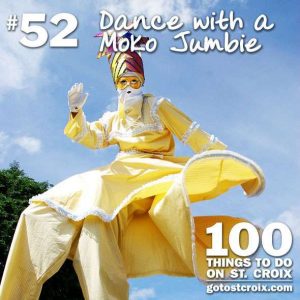
Moko Jumbies are a cultural icon here on St. Croix, and dancing with one of these talented stilt dancers should be on the top of every visitor’s ‘must-do’ list. Moko Jumbies have been part of the Virgin Island’s cultural heritage for over 200 years, and their origins can be traced to Africa as far back as the 13th and 14th centuries. Moko Jumbies are said to ward away evil spirits (or ‘jumbies’) from parades, gatherings, and festivals by standing on 10-20 foot high stilts, making them tall enough to reach the evil spirits and drive them away from the crowd. Moko Jumbies are generally covered from head to toe in elaborate costumes, hats, gloves, and masks. The story goes, that the Moko Jumbie must be completely covered (except for their eyes) so that the jumbies don’t recognize them.
History of Moko Jumbies, Cultural Icons of St. Croix
When Africans were brought to the Caribbean and sold to St. Croix planters as labor, they also brought with them seeds, oral lessons, and traditions, and of course their religious and cultural beliefs. Since many of the African cultural practices were forbidden while they were enslaved, the African people often had to disguise their practices in a festive context. Which may explain why the traditional plain “potato sack” costumes of the Moko Jumbie evolved into a colorful one.
The actual meaning of the words Moko Jumbie varies depending on whom you ask. In Central Africa, the word ‘moko’ means healer, while most English speaking people interpret moko as ‘mock’. Simple, huh? ‘Jumbie’ would be slang for ghost, or spirit. West Africans view a Moko Jumbie as a seeker or a protector and that their tallness is symbolic to the power of God.
Their presence was an important part of African religious ceremonies as well as to the rites of passage when a boy is recognized as a man and a girl as a woman. Many African tribes believed that Moko Jumbies acted as the spiritual seers and protectors of the village. It was believed that the height of the Moko Jumbie allowed them to see evil before it arrived and warn other villagers. Traditional African Moko Jumbie costumes were adorned with mirrors in the belief that evil spirits were afraid to see themselves. In Central Africa, it is believed that that the Moko Jumbie wards off evil spirits by their mockery of them.
Today, Moko Jumbies have become an integral part of St. Croix’s events and cultural scene. You can find the Moko Jumbies welcoming cruise ship passengers at the Frederiksted Pier, leading parades, dancing at Jump Ups, and as the premier entertainment at many island celebrations. These towering artists perform amazing dances on their stilts to festive music, combining almost slow-motion movements and acrobatic feats with synchronized choreography.
You really have to see the Moko Jumbies dance to truly appreciate them. Not only do they seem to float across the floor like ghosts at times, but they shimmy, run, jump and even hop around on one stilt! The balance of these performers is remarkable, especially when you consider that people are encouraged to dance with the Moko Jumbies. Adults and children alike dance under and around the Moko Jumbies’ stilts and take pictures with them, all while the statuesque performers dance and pose to the delight of the audience! Not only is dancing with a Moko Jumbie fun, it is also a one-of-a-kind cultural experience and is considered good luck!
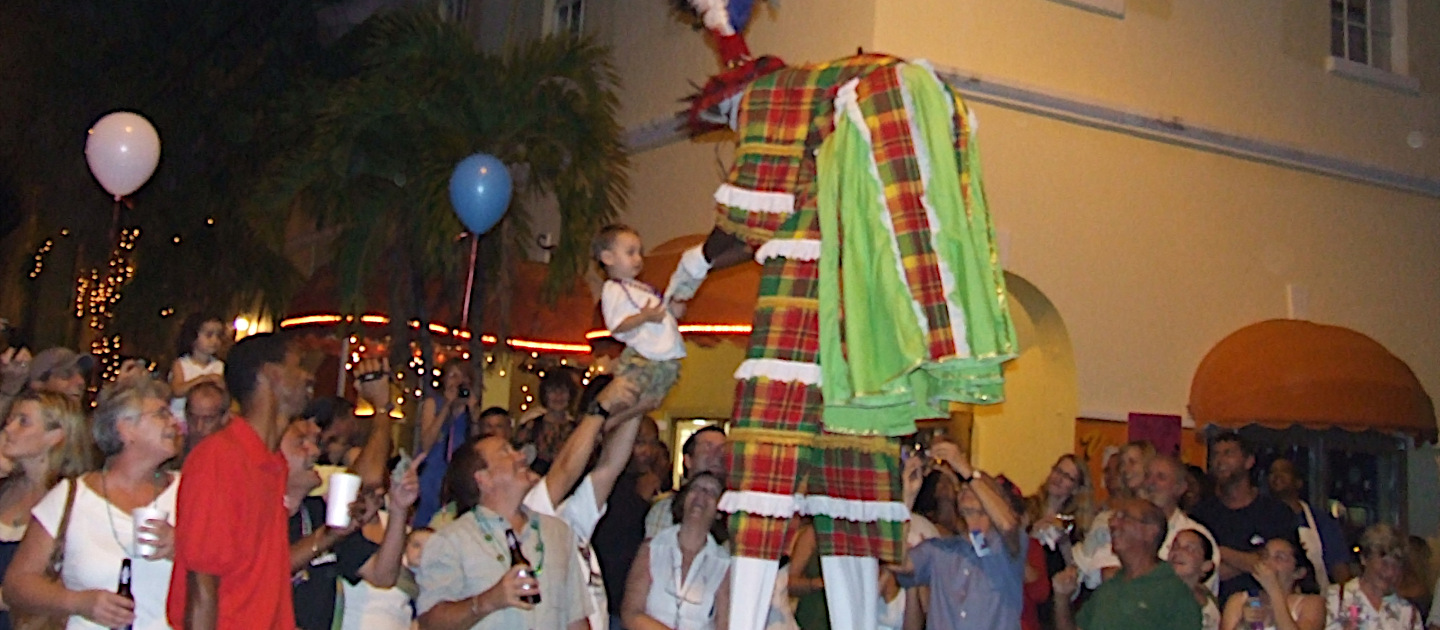
Seeing the Moko Jumbies is fun and exciting entertainment for the entire family, and can be experienced at every St. Croix festival and major event, parades, and weekly cultural nights offered at some hotels and resorts. Please see our Calendar of Events for the dates and locations of festivals, weekly Caribbean nights, and Jump Ups in Christiansted, where you can get your groove on with one of the Moko Jumbies of St. Croix.
– Jennie Ogden, EditorNote: Don’t forget to tip your Moko Jumbie when you get up and dance with them, they work VERY hard to preserve this cultural tradition while offering fun and lively entertainment.